 CarSignal
Check-in creates the customer, the vehicle, and the repair order in one pass, and puts the car on the board.
The flow
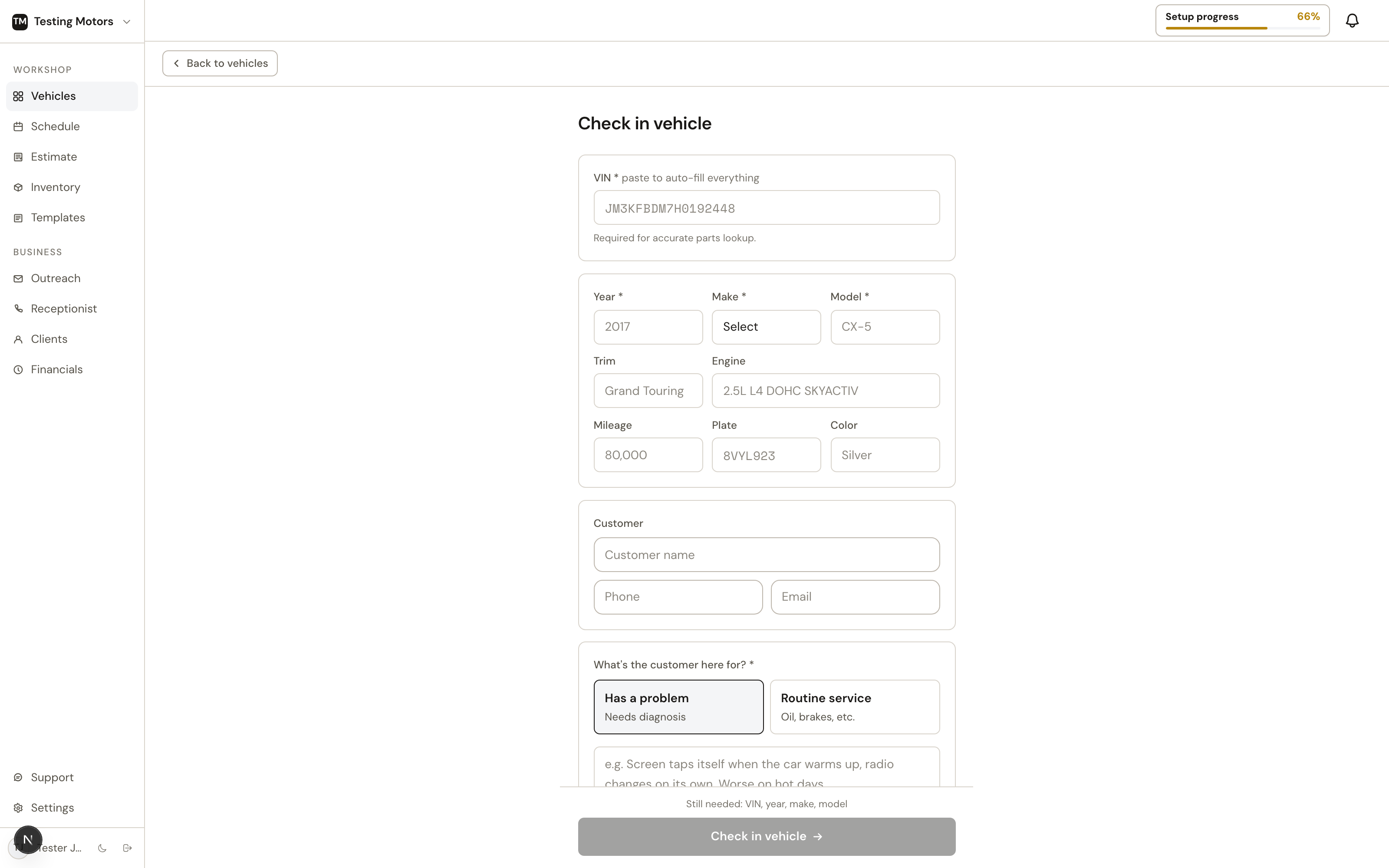
- Click + Check in vehicle on the Vehicles page (or New job in the mobile app, where you can scan the plate or VIN with the camera).
- Pick or create the client. Existing customers match by phone number, so repeat visits attach to their history automatically. Picking a customer also shows their vehicles as one-tap chips: tap the car that just pulled up and the whole form fills from its record — no retyping, and the fastest path for fleets.
- Enter the vehicle. Search it ("2018 F-150"), paste the VIN, or just type the license plate: the plate looks up the VIN and fills in the whole car. Any of the three is enough. If a VIN is already entered, the plate lookup still runs as a cross-check — it tells you when the plate comes back to a different VIN so a typo gets caught instead of saved. A car that is already in your shop's records fills the whole form from its record, owner included, and checks back in as a new visit on the same history; CarSignal blocks accidentally checking the same car in twice while it is still on the floor.
Someone other than the owner bringing the car in (a spouse, an employee driver)? A recognized car fills in its owner automatically; click Someone else dropping it off? to swap in whoever is at the counter. CarSignal then asks: keep them as this visit's contact — they get the visit's texts, approval links, and receipt while the car and its history stay with the owner — or make them the new owner outright. The vehicle page shows who this visit's updates go to, with one click to clear it; you can also set one mid-visit from Someone else this visit? in the customer card.
- Describe the visit. Choose Something's wrong for a complaint (enter the customer's words, plus any DTC codes if you scanned it) or pick routine maintenance services. You can also drop in canned jobs.
Serving commercial fleets that refer to trucks by their own unit numbers? Turn on Fleet unit numbers in Settings → Features and check-in gains a Unit # field. The number shows next to the plate on the board, on the vehicle page, and is searchable everywhere plates are; the Vehicles list also gains a "unit #" sort, so the board reads in the same order your fleet customer's dispatch sheet does.
That is it. The car appears in the right lane with an open issue, ready to quote.
Where check-ins come from without you
Most cars can arrive on the board before anyone types anything:
- The AI receptionist creates the client, vehicle, and issues from a phone call or text.
- Website booking does the same from your public booking page.
- Approved quotes with a chosen time create the appointment automatically.
In those cases, check-in is just confirming the car showed up.
DTC codes entered at check-in feed straight into AI diagnostics, so the diagnosis starts from real evidence.
Need a paper copy for the clipboard? The vehicle page's ... menu has Print repair order: pick the jobs, check Without prices for the tech copy, and you get the visit's jobs with complaint notes, labor hours, and part numbers. Handy for techs who work off a printed sheet.